
There is nothing quite like firing up your pellet grill on a sunny afternoon, anticipating the smell of slow-smoked brisket or perfectly seared steaks.
Green Mountain Grills (GMG) are renowned for their high-tech features, consistent temperature control, and the convenience of Wi-Fi connectivity.
They have built a loyal following among barbecue enthusiasts who value precision and flavor.
However, like any sophisticated piece of machinery involving electronics, moving parts, and combustion, things can sometimes go wrong.
It can be incredibly frustrating to have your meal prep halted by an error code or a grill that won’t ignite.
Whether you are dealing with erratic temperature swings, an auger jam, or connectivity issues, you aren’t alone.
This guide dives deep into the 10 most common Green Mountain Grill problems owners face.
We will walk you through practical, step-by-step fixes to get your grill back up and running, ensuring your next cookout is a success rather than a stress test.
1. The Grill Won’t Ignite (Failure to Start)
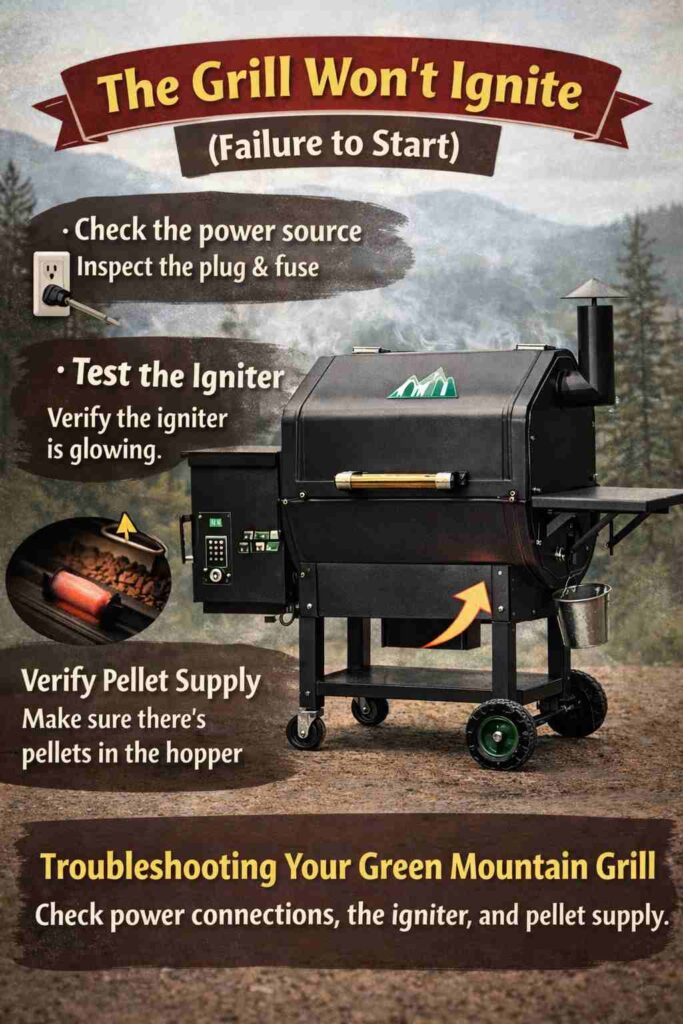
One of the most disheartening issues is pressing the start button and getting… nothing. If your GMG fails to light, the issue usually stems from the igniter rod, the firebox, or the power source.
The Fix
First, check the basics. Ensure the power cord is securely plugged into a working outlet and the connection to the grill is tight. Inspect the fuse on the control board (usually a standard 5 amp fuse) to see if it has blown.
If the power is fine, the problem is likely the igniter rod (hot rod).
- Inspect the Firebox: Remove the grill grates, grease tray, and heat shield. Vacuum out any ash in the firebox.
- Check the Rod: Turn the grill on to “0” (fan mode) then to “1” or start cycle. Look at the igniter rod sticking into the firebox. It should glow red hot within a few minutes.
- Manual Lighting: If the rod doesn’t heat up, it likely needs replacement. In the meantime, you can manually light the grill. Put a small handful of pellets in the firebox, add a little fire starter gel or a propane torch to light them, and once they are burning, turn the grill on.
Read Also: (10 Common Reasons) Green Mountain Grill Getting Too Hot
2. Temperature Fluctuations and Inconsistency
A major selling point of pellet grills is their oven-like precision. If your grill is swinging wildly between temperatures—too hot one minute, too cold the next—it defeats the purpose of “set it and forget it.”
The Fix
Temperature swings are often caused by the heat shield position or the thermal sensor.
- Adjust the Heat Shield: The heat shield inside the grill dictates air flow and heat distribution. If it is too far to the left or right, it can cause uneven heating. Consult your specific model’s manual for the precise measurement (usually centered or slightly offset depending on the model like the Daniel Boone or Jim Bowie).
- Clean the Thermal Sensor: Locate the small vertical metal rod inside the cooking chamber. Over time, smoke and grease build up on this sensor, insulating it and causing inaccurate readings. Gently wipe it down with a mixture of vinegar and water or a mild degreaser.
- Check the Chimney Cap: If the chimney cap is screwed down too tight, airflow is restricted, causing heat retention issues. There should be a gap of about two fingers’ width (1.5 to 2 inches) between the chimney and the cap.
Read Also: (10 Reasons) Traeger Silverton 810 Problems (With Fixes)
3. The Dreaded Auger Jam
The auger is the screw-like mechanism that feeds pellets from the hopper into the firebox. If this jams, the fire dies. This is often caused by wet pellets that have expanded and hardened like concrete within the tube.
The Fix
This is a labor-intensive fix, but necessary.
- Clear the Hopper: Remove all loose pellets from the hopper.
- Disassemble: You will likely need to remove the fan and the auger motor assembly from the side of the grill to access the auger shaft.
- Remove the Blockage: If the jam is severe, you may need to use a pipe wrench or vice grips to manually twist the auger free. If the pellets are wet and hardened, you might need to chip them out carefully with a long screwdriver or drill bit.
- Prevention: Never leave pellets in the hopper if you aren’t using the grill for a long period, especially in humid climates. Store pellets in an airtight bucket.
4. Error Code “E1”: Motor Failure
Green Mountain Grills use error codes to communicate specific failures. The “E1” code generally points to an issue with the auger motor. This means the system is trying to feed pellets, but the motor isn’t responding.
The Fix
- Check Connections: Unplug the grill. Open the control panel access (usually on the side or back) and check the wires connecting the auger motor to the control board. Ensure they haven’t wiggled loose.
- Check for Jams: Sometimes an E1 code is actually a symptom of the auger jam mentioned above. The motor creates an error because it physically cannot turn. Follow the steps for clearing an auger jam.
- Replace the Motor: If the auger is free and connections are good, the motor itself may have burned out and will need replacement. Contact GMG support if you are under warranty.
5. Error Code “E2”: Ignition Failure
The “E2” code appears when the grill fails to detect a fire within the designated startup time. This is the digital version of the “Grill Won’t Ignite” problem, but specifically means the sensor didn’t feel the heat rise.
The Fix
- Ash Buildup: The most common culprit is too much ash in the firebox covering the igniter rod. Vacuum your firebox regularly.
- Pellet Quality: If your pellets are old or damp, they may smolder rather than catch fire, causing the timeout. Use fresh, dry pellets.
- The Fan: Check if the combustion fan is running. If the fan isn’t blowing oxygen onto the fire, the pellets won’t ignite properly. If the fan is silent during startup, check its wire connections or replace the fan.
6. Excessive Noise or Grinding Sounds
A pellet grill produces a gentle hum from the fan and the intermittent whir of the auger. If you hear loud grinding, screeching, or clunking, something is mechanically wrong.
The Fix
Identify the source of the noise:
- The Auger: A grinding noise often means the auger is chewing through a particularly long or hard pellet, which is normal. However, constant grinding suggests the auger bearing might be failing or the motor gears are stripped.
- The Fan: A high-pitched screech usually indicates a failing bearing in the combustion fan or the hopper fan. Visually inspect the fans to ensure no debris (like a stray pellet or zip tie) is hitting the fan blades.
- Vibration: Sometimes, the noise is just loose bolts. Go around the grill legs, hopper assembly, and chimney to tighten all screws and bolts.
7. Wi-Fi Connectivity Issues
One of the coolest features of a GMG is controlling it from your phone. However, connecting the grill to a home network is a frequent headache for users. The grill operates on a specific frequency that can conflict with modern mesh routers.
The Fix
- Frequency Match: GMG grills operate on the 2.4GHz band. Most modern routers offer both 2.4GHz and 5GHz. If your phone is on 5GHz and the grill is on 2.4GHz, they might not “see” each other during the initial setup. Try to force your phone onto the 2.4GHz network during setup.
- Distance: Ensure the grill is within range of your Wi-Fi signal. Metal siding on a house can block signals. You may need a Wi-Fi extender near the patio.
- Firmware Update: If you can connect via “Point to Point” (connecting your phone directly to the grill’s Wi-Fi signal), check the app for a firmware update. Running the latest software often resolves connection stability bugs.
- Reset the Board: If all else fails, perform a hard reset on the control board (consult your manual for the button combination) and start the connection process from scratch.
8. Grill Not Getting Hot Enough
It is a chilly winter day, you want to sear steaks at 450°F, but the grill struggles to get past 350°F. This inability to reach high temperatures can ruin your cooking plans.
The Fix
- Weather Conditions: In extreme cold or wind, the thin metal of a standard pellet grill loses heat fast. Consider buying a thermal blanket (insulation jacket) designed for your specific GMG model. This helps retain heat significantly.
- Pellet Type: Not all pellets burn the same. Hardwoods like oak and hickory generally burn hotter than fruitwoods like apple or cherry. If you need high heat, switch to a premium hardwood blend.
- Combustion Fan: Ensure the fan is working at full speed. If it is sluggish, the fire won’t get enough oxygen to burn hot.
- Clean the Firebox: Excessive ash limits airflow. A clean fire pot allows for a larger, hotter flame.
9. Backburn (Smoke Coming from the Hopper)
Smoke should come out of the chimney, not the pellet hopper. If you see smoke rising from the pellet container, this is “backburn,” meaning the fire is traveling up the auger tube. This is dangerous and needs immediate attention.
The Fix
- Don’t Unplug It: If you see backburn, do not unplug the grill immediately. You need the fan to run to push the fire back into the firebox.
- Switch to Fan Mode: Turn the grill to “Fan Mode” (or the off cycle) so the auger stops feeding pellets but the fan keeps blowing.
- Check Chimney and Seals: Backburn is often caused by negative pressure. Ensure your chimney cap isn’t screwed down too tight. Also, check that the lid closes tightly. If the lid leaks too much air, it can disrupt the airflow draft.
- Ash Cleanout: A firebox overflowing with ash can force the fire to look for oxygen elsewhere—specifically, up the auger tube. Keep that firebox clean.
10. Display Screen Not Working
You plug the grill in, you hear the beep, but the LCD screen remains blank or scrambled. Without the screen, you can’t see your temperature or set your profiles.
The Fix
- Check Connections: Unplug the grill. Unscrew the control panel and check the ribbon cable connecting the screen to the board. These can wiggle loose during transport or due to heat vibration. Unplug the ribbon cable and firmly plug it back in.
- Moisture Damage: If the grill was left out in the rain without a cover, water may have seeped into the control board. If you suspect moisture, unplug it, remove the board, and let it dry out indoors in a bag of rice or with silica packets for 48 hours.
- Replace the Board: If the display is dead but the grill still powers on (you can hear the fan), the LCD component has likely failed. You will need to order a replacement control board from GMG or a third-party supplier.
Mastering Your Green Mountain Grill
Owning a Green Mountain Grill can transform your backyard cooking, providing flavors that gas and charcoal struggle to replicate.
While these 10 common Green Mountain Grill problems can be frustrating, almost all of them are solvable with a bit of troubleshooting and maintenance.
The key to longevity with any pellet grill is routine maintenance.
Vacuum the ash out after every 2-3 long cooks, keep the thermal sensor clean, keep your pellets dry, and protect the electronics from heavy rain.
By understanding how your machine works and how to fix these common hiccups, you ensure that the only thing smoking in your backyard is the food.
Frequently Asked Questions (FAQs)
Why is my GMG reading the wrong temperature?
Inaccurate temperature readings are usually caused by a dirty thermal sensor. The sensor is a small vertical metal rod inside the grill.
Over time, smoke and grease coat the sensor, insulating it from the true heat. Clean it gently with a scouring pad and warm soapy water or vinegar.
How often should I clean my Green Mountain Grill?
You should clean the grill grates after every use.
For the internal components, you should vacuum out the firebox and the bottom of the barrel after every 2-3 bags of pellets burned (or every 3-5 long cooking sessions).
Always empty the grease bucket before it gets full to avoid overflows.
Can I leave pellets in the hopper?
It depends on your climate. If you live in a dry area, you can leave them in for a few weeks. However, in humid climates, pellets absorb moisture from the air quickly.
This causes them to swell and break down, leading to auger jams. It is best practice to empty the hopper if you won’t be using the grill for more than a week.
How do I reset my Green Mountain Grill?
To reset the control board, unplug the grill. Then, plug it back in while holding the “Food” button (or the specific reset combination for your model) until the board counts up or resets.
Always consult your specific owner’s manual, as reset procedures vary between the Daniel Boone, Jim Bowie, and Trek models.
What do I do if my grill catches fire?
If you have a massive grease fire (not just a flare-up), do not throw water on it.
Unplug the grill immediately to stop the fan (which feeds the fire oxygen) and keep the lid closed to starve the fire. If the fire is out of control, call the fire department. To prevent this, clean your grease tray and drain tube regularly.