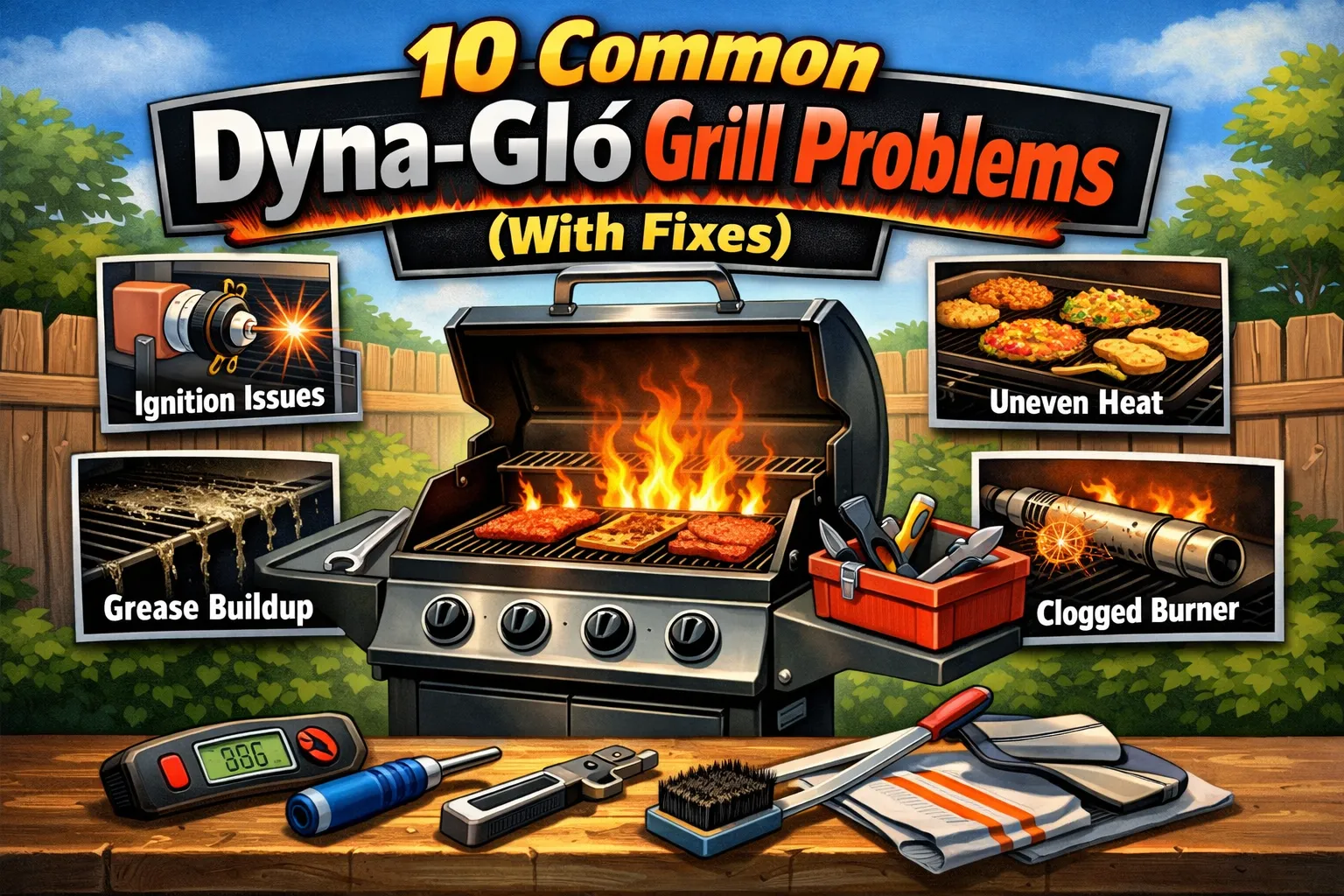

If you’re a proud owner of a Dyna-Glo grill, you know how important it is to keep it in top condition. However, like any appliance, grills can encounter problems over time.
Whether it’s uneven heat, ignition issues, or grease buildup, these common Dyna-Glo grill problems can affect your cooking experience.
But don’t worry! In this article, we’ll walk you through 10 of the most common issues grill owners face and offer practical fixes.
With a few simple troubleshooting steps, you can have your Dyna-Glo grill back in action and enjoy your outdoor cooking to the fullest.
1. The Grill Won’t Light (Ignition Failure)
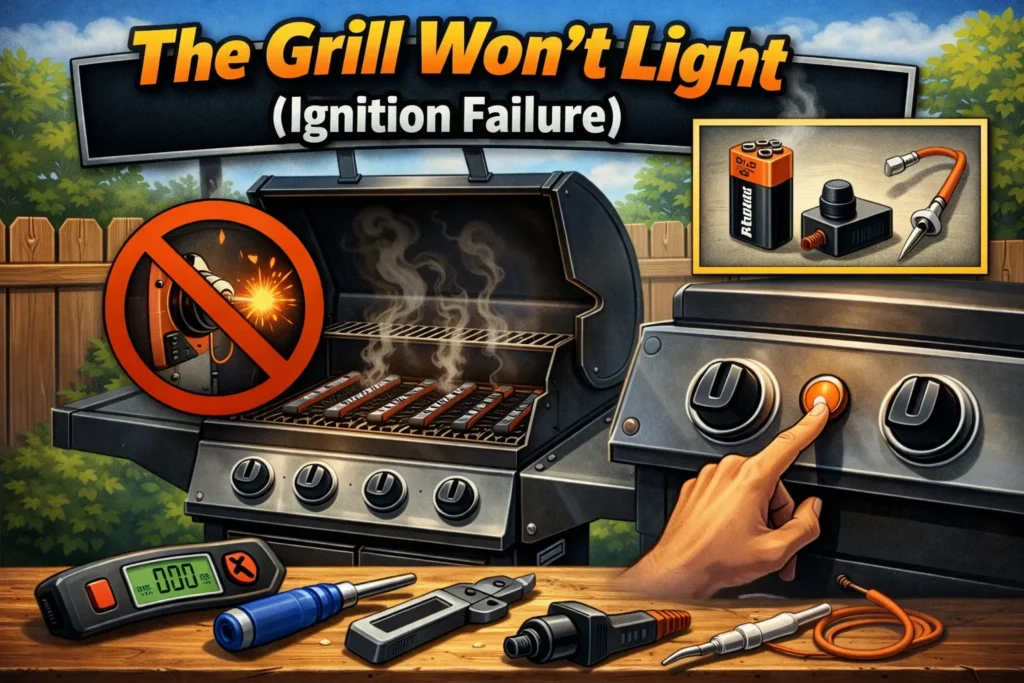
One of the most frequent complaints from grill owners is an ignition system that simply refuses to work. You turn the knob, hear the clicking sound, but no flame appears.
The Cause
Ignition failure usually stems from one of three things: a dead battery in the igniter (if it’s electronic), a misaligned electrode, or a clogged burner tube that prevents gas from reaching the spark.
The Fix
- Check the Battery: If your Dyna-Glo model uses an electronic igniter, unscrew the ignition button cap. Replace the AA or AAA battery. Corrosion inside the battery compartment can also be an issue, so wipe it clean with a dry cloth or a bit of sandpaper.
- Inspect the Electrode: Lift the cooking grates and heat tents. Locate the ignition electrode (a small metal pin near the burner). It should be roughly 1/8 to 1/4 inch away from the burner port. If it’s too far, gently bend it closer with pliers.
- Clean the Connections: Grease and debris can coat the electrode, preventing a spark. Clean the tip with a cotton swab dipped in rubbing alcohol.
- Manual Lighting: As a temporary fix, use a match holder or a long-stemmed lighter to manually light the burner through the side hole of the firebox while turning the gas on.
Read Also :15 Common Blackstone Grill Problems (With Fixes)
2. Low Flame or Low Heat Output
You have the knobs turned to “High,” but the thermometer barely creeps past 300°F. This makes searing meat impossible and increases cooking time significantly.
The Cause
This is often caused by the “bypass mode” safety feature on the propane regulator. If you open the gas tank valve too quickly while the burner knobs are on, the regulator restricts gas flow, thinking there is a leak.
The Fix
To reset the regulator:
- Turn off all burner control knobs.
- Turn off the propane tank valve.
- Disconnect the regulator hose from the tank.
- Wait for about 30 seconds to let the pressure equalize.
- Reconnect the hose to the tank.
- Slowly open the propane tank valve (take about 5 seconds to turn it).
- Light the grill as usual. The pressure should be restored, giving you a full flame.
Read Also : 10 Common Blaze Grill Problems (With Fixes)
3. Yellow or Orange Flames
A healthy gas grill flame should be mostly blue with a tiny tip of yellow. If your flames are predominantly yellow or orange, it indicates an improper air-to-gas mixture.
The Cause
Yellow flames mean the burners are starving for oxygen. This is typically due to an obstruction in the venturi tubes (the tubes connecting the control valves to the burners) or the air shutter being closed too tightly. Spiders and insects are notorious for building webs inside these tubes during the off-season.
The Fix
- Clean the Venturi Tubes: Remove the burners and use a flexible venturi brush or a pipe cleaner to clear out any spider webs or debris from inside the tubes.
- Adjust the Air Shutters: Locate the air shutter at the end of the burner. Loosen the screw and rotate the shutter slightly to allow more air in. Test the flame until it turns blue, then tighten the screw.
4. Uneven Heating (Hot and Cold Spots)
You put four burgers on the grill; two are burnt to a crisp, and the other two are raw in the middle. Uneven heating defeats the purpose of a quality grill.
The Cause
This is usually a result of blocked burner ports. Over time, grease drippings and food particles can clog the tiny holes along the side of the burner, preventing gas from escaping evenly.
The Fix
- Clean the Burner Ports: Wait for the grill to cool completely. Remove the burners. Use a stiff wire brush to scrub the exterior.
- Clear the Holes: Take a paper clip or a small drill bit and poke it through each individual port hole to ensure it is clear.
- Check Heat Tents: Ensure your heat tents (also called flame tamers) are properly seated and not rusted through. These disperse heat; if they are damaged, heat will concentrate directly above the burner.
5. Excessive Flare-Ups
While a small flare-up can add flavor, constant, large flames that engulf your food will char it instantly and can be dangerous.
The Cause
Flare-ups are almost always caused by excess grease buildup. When hot fat drips onto the heat tents or accumulates in the firebox, it ignites.
The Fix
- Deep Clean the Firebox: Scrape the inside of the grill box to remove built-up carbon and grease. Push the debris into the grease tray.
- Clean Heat Tents: Scrub the heat tents with soapy water to remove old grease layers.
- Trim Your Meat: Trim excess fat from steaks and chops before grilling.
- Cook with Lid Down: Keeping the lid closed reduces the amount of oxygen available to fuel the fire, keeping flare-ups manageable.
6. Rust on Cooking Grates
Dyna-Glo grills often use porcelain-enameled or cast-iron grates. If the protective coating chips or wears off, moisture will cause rust.
The Cause
Leaving the grill uncovered, not seasoning cast iron grates, or using harsh scrapers that chip the porcelain coating accelerates rusting.
The Fix
- Remove Surface Rust: If the rust is minor, scrub it with a nylon brush or a ball of aluminum foil. Avoid steel wool on porcelain, as it scratches.
- Re-season Cast Iron: If you have cast iron grates, wash them, dry them thoroughly (heating them up helps), and coat them with a high-smoke-point oil (like canola or vegetable oil). Heat the grill for 30 minutes to bake the oil in.
- Prevention: Always oil your grates before and after cooking, and invest in a high-quality, waterproof grill cover.
7. Regulator Freezing Up
You might notice frost forming on your regulator or the propane tank itself, accompanied by poor gas flow.
The Cause
This usually happens in cool, humid weather when the gas is flowing too rapidly from the tank. The rapid expansion of gas causes the temperature to drop, freezing the humidity in the air.
The Fix
- Slow Down: Turn the burners to a lower setting.
- Reset: If the flow stops, perform the regulator reset mentioned in problem #2.
- Tank Level: Check if your propane tank is low. A tank nearing empty has less liquid surface area to vaporize gas, which can contribute to freezing issues.
8. Whistling or Hissing Noises
A grill shouldn’t sound like a tea kettle. A humming or whistling noise coming from the regulator area is concerning.
The Cause
A whistling sound is often caused by air trapped in the gas line or a vibration of the rubber diaphragm inside the regulator. A hissing sound, however, usually indicates a gas leak.
The Fix
- For Whistling: This is often an annoyance rather than a danger. Try repositioning the hose to reduce tension. Resetting the regulator (see problem #2) can also stop the noise.
- For Hissing (Leak Test): If you hear hissing or smell gas, turn everything off immediately. Mix a solution of 50% water and 50% dish soap. Brush it onto the hose connections and the regulator. Turn the gas on slowly. If bubbles form, you have a leak. Tighten the connection or replace the faulty part.
9. Peeling Paint on the Inside of the Lid
Homeowners often panic, thinking the metal of their grill is disintegrating and flaking onto their food.
The Cause
Fortunately, this is rarely paint. It is usually a buildup of carbonized grease and smoke deposits that have hardened and are now peeling off in flakes that look like paint.
The Fix
- Scrape and Scrub: This is a maintenance issue. Use a putty knife or a grill brush to scrape the inside of the lid until all the flakes are gone.
- Wash: Wash the inside of the lid with warm, soapy water and dry it thoroughly.
- Paint Repair (External Only): If the outside of your grill is peeling, you can sand it and use high-heat BBQ spray paint. Never paint the inside of a grill.
10. Burner Corrosion and Failure
Eventually, you may find that a burner has a large hole or has cracked completely, creating a massive hot spot or a fire hazard.
The Cause
Burners are subjected to extreme heat expansion and contraction, plus corrosive acids from food drippings and salts. Over time, the metal fatigues and rusts through.
The Fix
- Replacement: Once a burner has rusted through or cracked, it cannot be safely repaired with patches or tape. You must replace it.
- Identification: Note your Dyna-Glo model number (usually found on a sticker on the back or inside the door) to order the correct replacement tube or cast-iron burner.
- Installation: Most Dyna-Glo burners are held in by a cotter pin or a single screw at the back of the firebox. Remove the old one, slide the new one in (ensuring the venturi tube fits over the valve), and secure it.
Conclusion
Dyna-Glo grills are robust machines, but like any car or appliance, they require regular attention.
Most issues—from low flames to stubborn ignitions—are solved with cleaning rather than complex mechanical repairs.
By understanding these 10 common Dyna-Glo grill problems, you can save money on professional repairs and extend the lifespan of your unit.
Routine maintenance is your best defense. Clean your firebox, check your catch pan, inspect your hoses, and keep the unit covered when not in use. With these fixes in your arsenal, you’re ready to tackle any hiccup your grill throws your way, ensuring the BBQ season never has to pause.
(FAQs)
How often should I clean my Dyna-Glo grill?
You should perform a light cleaning (brushing grates) after every use. A deep cleaning—removing burners, scraping the firebox, and cleaning heat tents—should be done at least twice a year, or more often if you grill weekly.
Why is my Dyna-Glo grill smoking so much?
Excessive white smoke usually indicates a buildup of grease on the heat tents or the bottom of the grill. It’s time to scrape the interior and clean the drip tray. If the smoke is black, it indicates a poor air-to-gas mixture (see problem #3).
Can I use lava rocks in my Dyna-Glo grill?
Most modern Dyna-Glo gas grills use heat tents (vaporizer bars) rather than lava rocks. Adding lava rocks to a grill designed for heat tents can obstruct airflow and cause dangerous overheating. Check your owner’s manual before making modifications.
Where can I find the model number on my Dyna-Glo grill?
The model number is typically located on a silver or white rating label. You can usually find this on the back of the grill cabinet, inside the cabinet doors, or on the side of the control panel.
My electric igniter clicks but won’t light—is it broken?
Not necessarily. It could be a dead battery, a loose wire, or a dirty electrode. Try replacing the battery and cleaning the electrode tip with alcohol before ordering a replacement part.